At the end of June, I flew out to Russia - Sam and I had been invited to present to the Academy of Science's Institute in Kazan about Social Media, as well as get involved with the International Universiade that's taking place there.
However before we get there, we decided to take a stop over in Moscow and St Petersburg to see the sights.
It's fantastic to be back home, and although the aim of the trip is around Social Media, everywhere I go, I cannot not notice the differences in the relationships between people - especially teens and parents. So here's some of my insights I'd love to share that I've come to over the last week or so. After all, this is the country who's culture has influenced how my parents have parented me, and the culture I was brought up with that isn't necessarily present in New Zealand, or even Australia from what I've seen. These difference in culture is the reason why I wrote my books in the first place - to make a hybrid of the East and West cultures to give timely advice for parents about the best ways of parenting, which is applicable to any nation in the world.
So here we go...
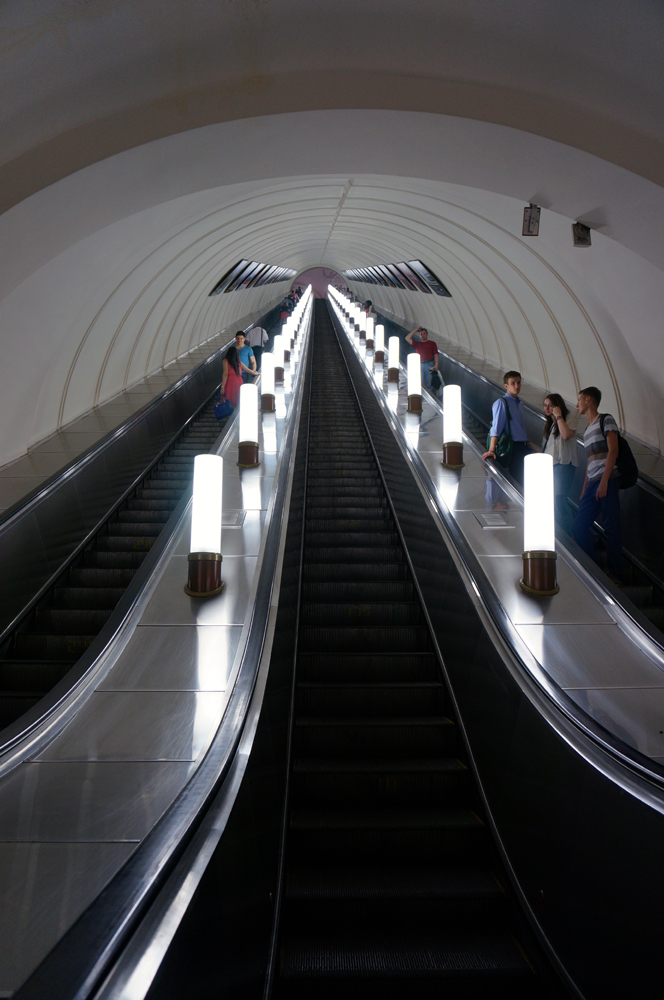
Below you'll see one of the 'main' marks of Moscow - the Metro. The Stations themselves underground are amazing - the Moscow Metro has been compared to London's Tube and New York's Subway, but Moscow really prides themselves in what they achieved with the decor of the different stations, and with reason. But this shot below is not of a station, but rather one of the escalators that takes commuters underground. It's massive in most stations, and although the photo doesn't give it justice, you're travelling on it for a good few minutes. Why this relates to teenagers and parents: these little times of 'peace' you can catch in the bustling city mean extra time for people to strike conversation. As you travel up or down on the escalators, you'll see people of different ages talking to each other, engaged in conversation (Sam noticed there were a lot of 'cougars' around - women with younger men until he found out these were in fact Mums and their sons holding hands - even when their sons are teenagers! How's that for love!). I believe this time, that the city makes possible for people to talk can help strengthen relationships - in the western world, I think we find it hard to find those precious few minutes to catch up on what's happening - even if I compare the Moscow Metro to New Zealand's Wellington public bus system, once you get on a bus, there isn't as much time to talk - it's noisy, you may need to stand up to make room for someone to sit down, and very rarely do you travel on public transport between home and work with your kids. I guess the lesson to learn from here is to take any opportunity you can - even if it's just a few minutes to just chat with your teen - you never know what might come up, and you won't regret those lost minutes.
The next photo is of one of the rooms inside the St Basil's Cathedral. Russia has the advantage of having many large, beautiful churches and even if you are not religious, kids are brought up to appreciate the beauty these monuments possess and their importance and place in Russian history. I guess comparing this to New Zealand which is a relatively young country, I can't just tell New Zealand parents to take their kids to church to see the artwork, but what I would suggest is giving your children and teens more inclination to understand and respect history; history of your family, history of their country; one big thing for Russian kids is that they are taught to know and appreciate the country's history, whether they like it or hate it, it's history - it's worth knowing about, and thinking about. Take time out to dig up old photos of your ancestors or relatives and go through them with your teens, take time in the weekends to go and visit any museums, or even sit down with a history book - knowing their roots, teenagers are more likely to appreciate what they have now, and respect what has come before their time.

In terms of places to visit to catch up with your teen, or for some down time, Russia is only just starting to get into the 'coffee culture' that's so prominent in New Zealand already (you're lucky if your small coffee costs you around NZD$5-NZD$10). It's almost impossible to find a Flat White in Russian cafes (unless you're lucky to come across a Starbucks) and because the country is full of tea drinkers, but the Russian baked goods are popular with all - most of the time, a cake or some sort of pastry will cost only a couple of dollars. This creates a culture of people coming back to cafes, or going around different ones in search for an interesting sweet thing of some sort which keeps downtime spent together interesting. Sure, you may think Russia is a large place and you won't be able to visit every single cafe in your lifetime, but you don't always have to go somewhere new wherever you live - it's the experience of trying something new, with your teen who you love, and just spending some time just to talk.

Ever thought your kids weren't doing enough work at school? Russian parents think this is always the case! They even have government buildings dedicated to extra curricular activities outside of school! Get your teen engaged in extra curricular activities as much as you can - this gives them less free time to get into trouble, but also a valuable extra skill, extra friends, and knowledge.

And lastly, just a thought about the difference in tagging and graffiti - in Russia, it seems it's more people's voices and opinions, rather than hooliganing for the sake of it. Below you'll see some poor soul lamenting how expensive iPhones are! Guess they don't feel they need to mark their territory but rather tell everyone about...I guess...stuff....

More insights, observations and other stories to come - until then, Dosvidaniya!

However before we get there, we decided to take a stop over in Moscow and St Petersburg to see the sights.
It's fantastic to be back home, and although the aim of the trip is around Social Media, everywhere I go, I cannot not notice the differences in the relationships between people - especially teens and parents. So here's some of my insights I'd love to share that I've come to over the last week or so. After all, this is the country who's culture has influenced how my parents have parented me, and the culture I was brought up with that isn't necessarily present in New Zealand, or even Australia from what I've seen. These difference in culture is the reason why I wrote my books in the first place - to make a hybrid of the East and West cultures to give timely advice for parents about the best ways of parenting, which is applicable to any nation in the world.
So here we go...
Below you'll see one of the 'main' marks of Moscow - the Metro. The Stations themselves underground are amazing - the Moscow Metro has been compared to London's Tube and New York's Subway, but Moscow really prides themselves in what they achieved with the decor of the different stations, and with reason. But this shot below is not of a station, but rather one of the escalators that takes commuters underground. It's massive in most stations, and although the photo doesn't give it justice, you're travelling on it for a good few minutes. Why this relates to teenagers and parents: these little times of 'peace' you can catch in the bustling city mean extra time for people to strike conversation. As you travel up or down on the escalators, you'll see people of different ages talking to each other, engaged in conversation (Sam noticed there were a lot of 'cougars' around - women with younger men until he found out these were in fact Mums and their sons holding hands - even when their sons are teenagers! How's that for love!). I believe this time, that the city makes possible for people to talk can help strengthen relationships - in the western world, I think we find it hard to find those precious few minutes to catch up on what's happening - even if I compare the Moscow Metro to New Zealand's Wellington public bus system, once you get on a bus, there isn't as much time to talk - it's noisy, you may need to stand up to make room for someone to sit down, and very rarely do you travel on public transport between home and work with your kids. I guess the lesson to learn from here is to take any opportunity you can - even if it's just a few minutes to just chat with your teen - you never know what might come up, and you won't regret those lost minutes.
The next photo is of one of the rooms inside the St Basil's Cathedral. Russia has the advantage of having many large, beautiful churches and even if you are not religious, kids are brought up to appreciate the beauty these monuments possess and their importance and place in Russian history. I guess comparing this to New Zealand which is a relatively young country, I can't just tell New Zealand parents to take their kids to church to see the artwork, but what I would suggest is giving your children and teens more inclination to understand and respect history; history of your family, history of their country; one big thing for Russian kids is that they are taught to know and appreciate the country's history, whether they like it or hate it, it's history - it's worth knowing about, and thinking about. Take time out to dig up old photos of your ancestors or relatives and go through them with your teens, take time in the weekends to go and visit any museums, or even sit down with a history book - knowing their roots, teenagers are more likely to appreciate what they have now, and respect what has come before their time.

In terms of places to visit to catch up with your teen, or for some down time, Russia is only just starting to get into the 'coffee culture' that's so prominent in New Zealand already (you're lucky if your small coffee costs you around NZD$5-NZD$10). It's almost impossible to find a Flat White in Russian cafes (unless you're lucky to come across a Starbucks) and because the country is full of tea drinkers, but the Russian baked goods are popular with all - most of the time, a cake or some sort of pastry will cost only a couple of dollars. This creates a culture of people coming back to cafes, or going around different ones in search for an interesting sweet thing of some sort which keeps downtime spent together interesting. Sure, you may think Russia is a large place and you won't be able to visit every single cafe in your lifetime, but you don't always have to go somewhere new wherever you live - it's the experience of trying something new, with your teen who you love, and just spending some time just to talk.

Ever thought your kids weren't doing enough work at school? Russian parents think this is always the case! They even have government buildings dedicated to extra curricular activities outside of school! Get your teen engaged in extra curricular activities as much as you can - this gives them less free time to get into trouble, but also a valuable extra skill, extra friends, and knowledge.

And lastly, just a thought about the difference in tagging and graffiti - in Russia, it seems it's more people's voices and opinions, rather than hooliganing for the sake of it. Below you'll see some poor soul lamenting how expensive iPhones are! Guess they don't feel they need to mark their territory but rather tell everyone about...I guess...stuff....

More insights, observations and other stories to come - until then, Dosvidaniya!